A Ship That Changes Course

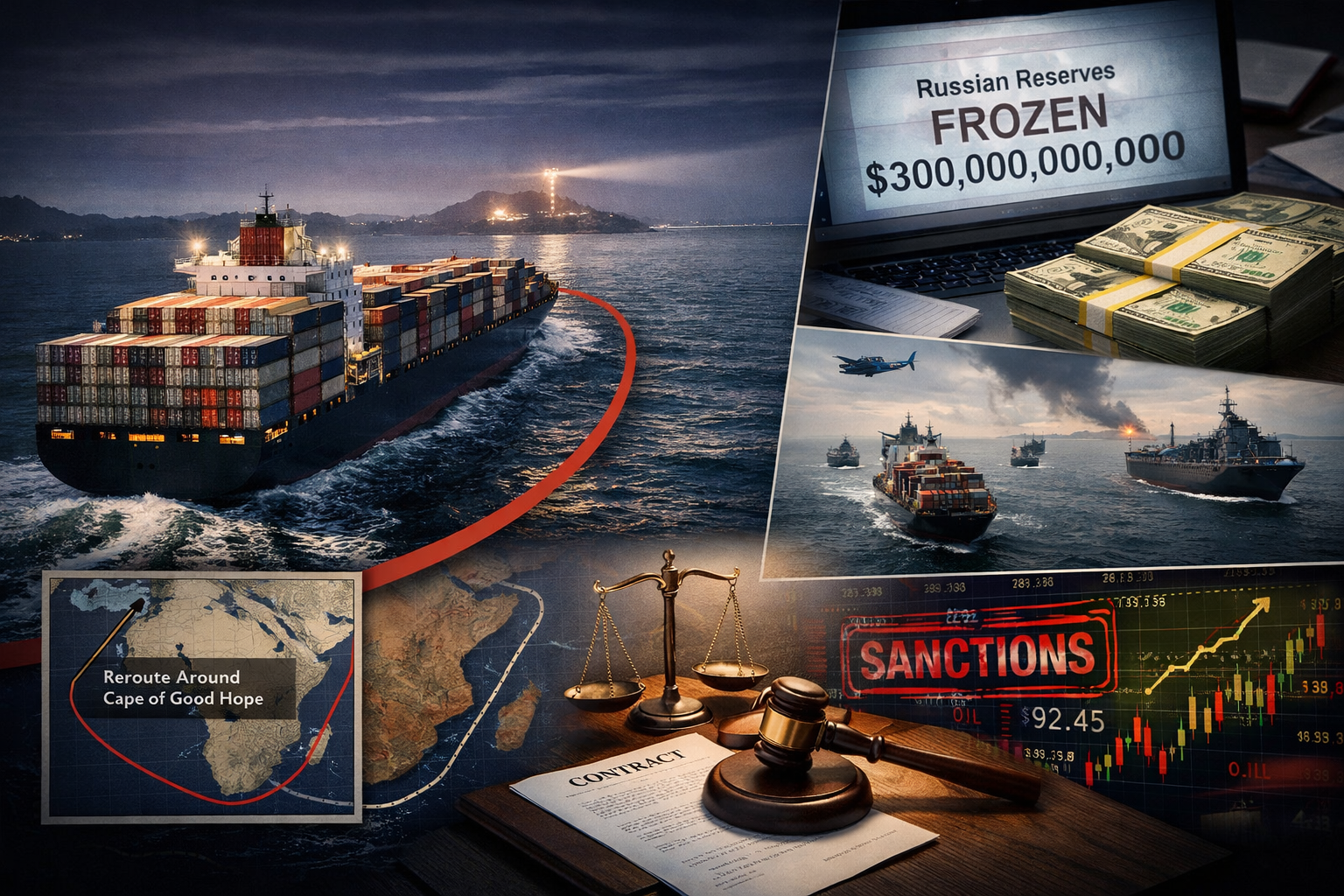
A container ship quietly changes course in the middle of the night.
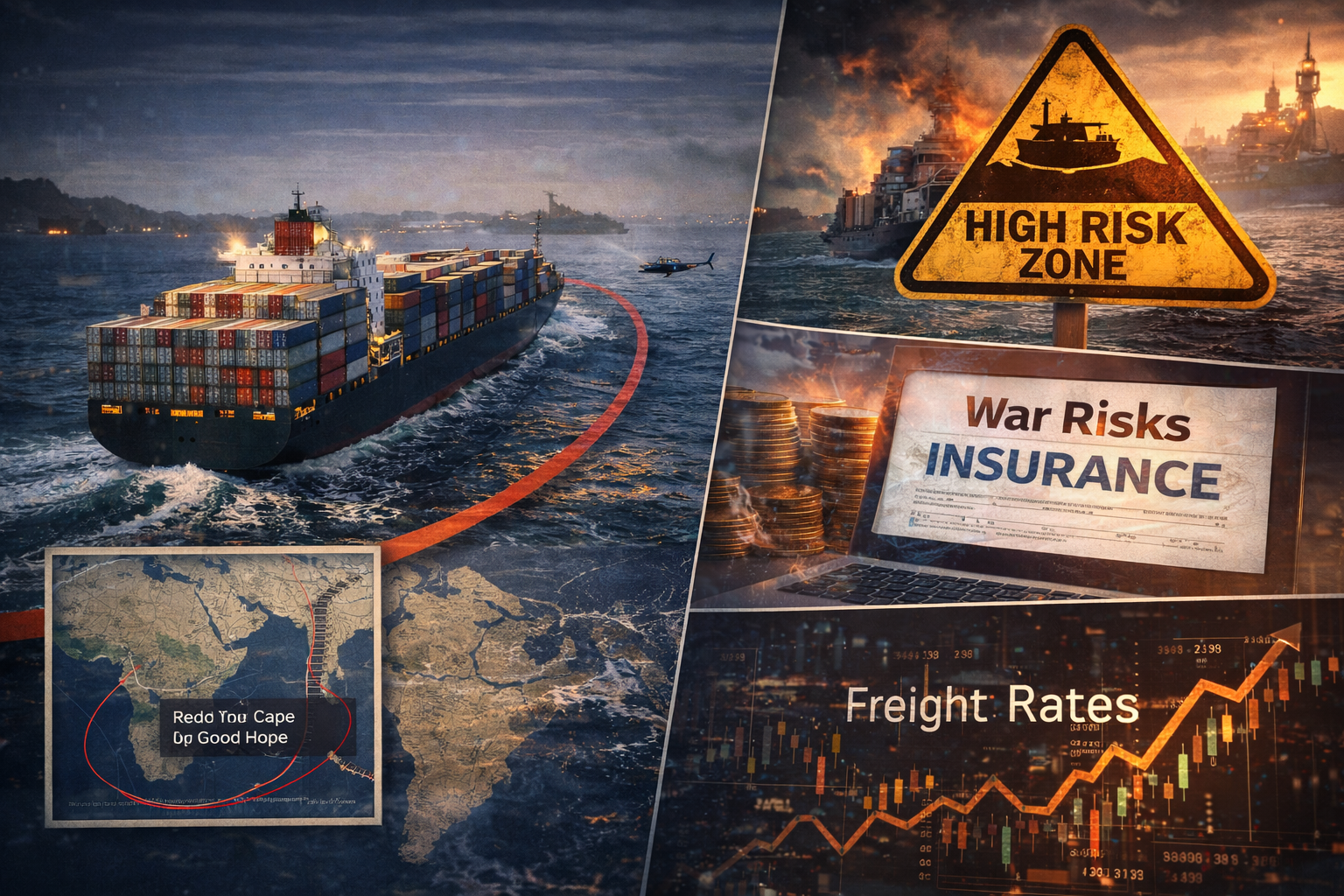
Instead of passing through the Red Sea and the Suez Canal—normally one of the world’s busiest shipping corridors—the vessel turns south, beginning a long detour around the Cape of Good Hope. The journey will take longer. Fuel costs will increase. Delivery schedules will shift.
Elsewhere, an insurance underwriter updates a risk classification. A region that yesterday looked commercially routine is suddenly treated as a higher-risk maritime zone. Insurance premiums adjust accordingly.
And in a central bank balance sheet thousands of miles away, a line item remains frozen—an asset that legally exists but cannot practically be used.
None of these developments initially looks like a legal story. Yet in many ways they are.
Regional conflicts often enter financial markets in indirect ways. The first signals are usually visible in prices: oil markets react, shipping costs rise, volatility increases. These are the metrics that traders and analysts tend to watch most closely.
But beneath those market movements, something more structural is often taking place.
The legal and institutional framework that allows global markets to function smoothly begins to shift.
The Rules Markets Usually Take for Granted
Most of the time, investors rarely need to think about that framework. The global financial system appears stable precisely because the underlying rules are predictable. Assets are assumed to be protected by legal systems. Contracts are assumed to be enforceable. Payments move across borders through banking networks that operate with remarkable reliability.
This legal architecture is rarely discussed in day-to-day market commentary because it normally remains invisible. It sits quietly in the background, enabling the daily flow of capital and trade.
Regional conflicts have a way of bringing that hidden infrastructure into view.
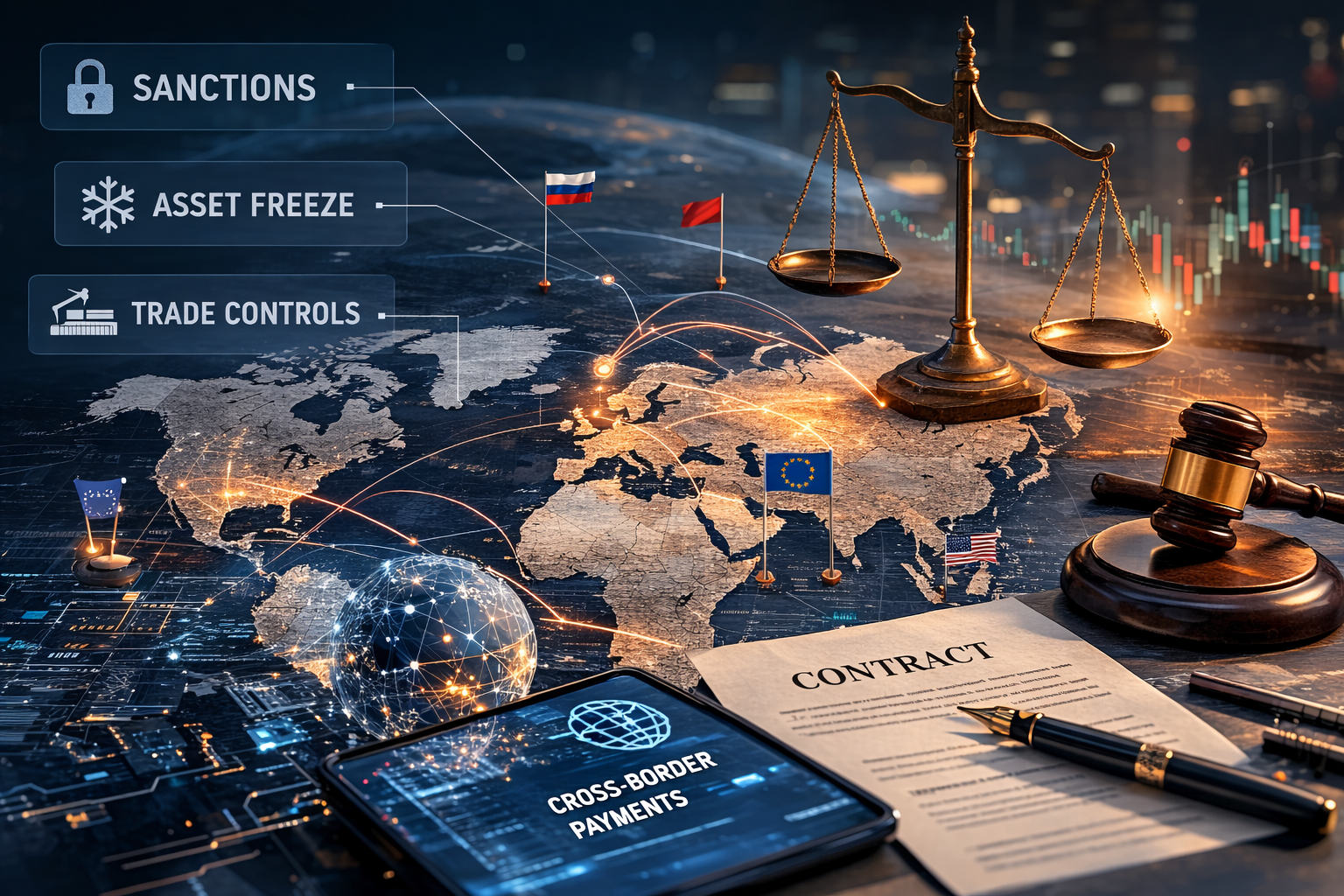
When geopolitical tensions intensify, governments tend to respond not only through diplomacy or security policy but also through legal instruments. Sanctions, financial restrictions, asset freezes, and trade controls have become common tools in the geopolitical toolkit.
These measures operate through formal legal systems, but their consequences are economic. They shape where capital can move, which institutions can transact, and how global trade flows operate.
For investors, the implication is subtle but important: the rules that support global markets are not always neutral. In periods of geopolitical stress, they can become instruments of policy.
That realization has become increasingly visible in recent years.
Ownership Isn’t Always Access
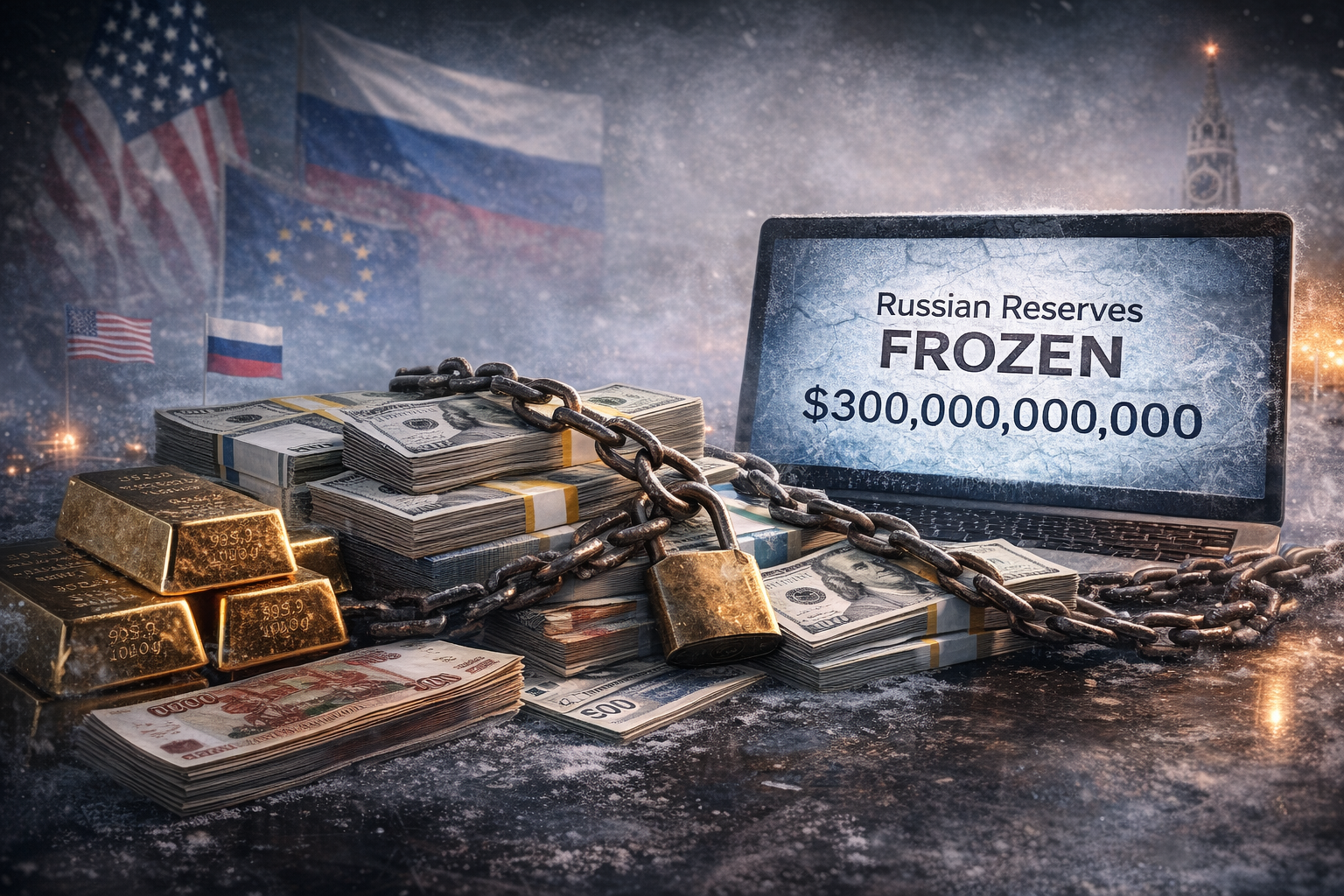
One of the clearest examples emerged in 2022, when Western governments immobilized a large portion of Russia’s central bank reserves following the escalation of the Russia–Ukraine conflict.
Roughly $300 billion in foreign exchange reserves became inaccessible after coordinated restrictions were introduced by the United States, the European Union, the United Kingdom, and several allied countries.
From a strictly legal standpoint, the assets were not confiscated. Russia still technically owns them. But ownership and usability suddenly became two very different concepts.
For decades, central bank reserves were widely regarded as among the safest assets in the global financial system. Countries stored reserves in major financial centers precisely because those jurisdictions offered stable institutions, strong legal protections, and deep financial markets.
The expectation was straightforward: if an asset is legally yours, it should also be accessible.
The events of 2022 complicated that assumption.
The legal title remained intact, yet the assets themselves were effectively immobilized. Access depended not only on ownership but also on the geopolitical relationship between jurisdictions.
For policymakers, the episode triggered a broader discussion about reserve diversification and financial resilience. Some central banks have reportedly increased their gold holdings or explored alternative reserve allocations.
For investors, the episode revealed something that had rarely been visible before: asset security is not determined solely by legal stability. It may also be influenced by geopolitical alignment.
That is a meaningful shift. Markets have long priced risk according to credit, liquidity, and macro conditions. Increasingly, they may also need to price the possibility that access itself can become conditional.
Financial Plumbing as Leverage
Financial infrastructure tells a similar story.
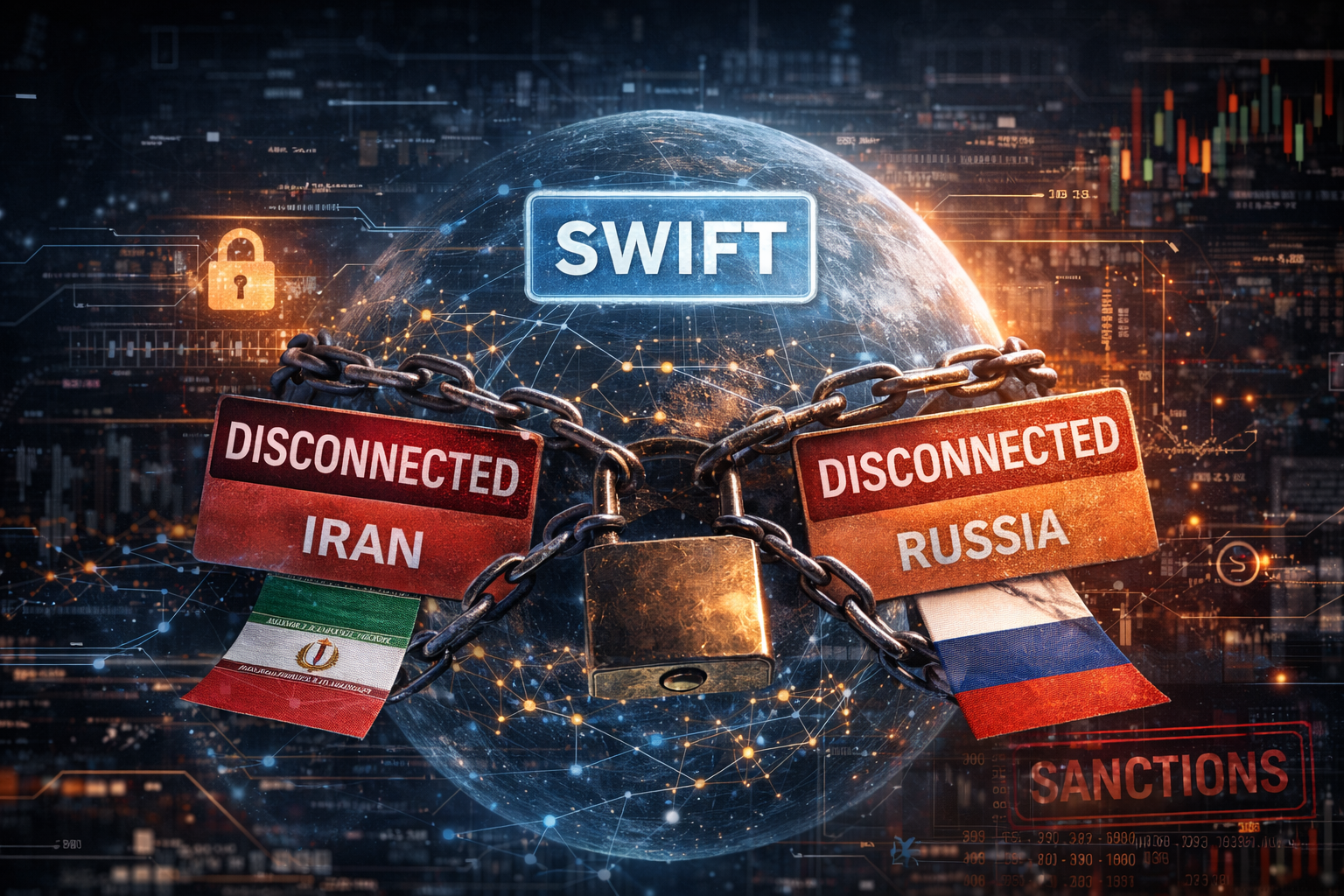
Modern global finance runs on networks that most market participants rarely think about. One of the most important of these networks is SWIFT, the messaging system that connects banks around the world.
SWIFT does not actually transfer money. Instead, it provides the communication system that allows financial institutions to send payment instructions across borders. In practical terms, that messaging system forms a critical part of the plumbing of global finance.
Because of its central role, access to the network effectively determines whether banks can participate normally in international transactions.
In 2012, several Iranian banks were disconnected from the SWIFT system following pressure from the United States and the European Union. The decision significantly limited Iran’s ability to conduct cross-border financial transactions.
A decade later, similar restrictions were applied to several Russian banks.
For many years, systems like SWIFT were viewed primarily as technical infrastructure—neutral platforms designed to facilitate commerce.
Geopolitical tensions have demonstrated that this perception was incomplete. Financial infrastructure can also become leverage.
For investors, that realization carries practical implications. If access to key financial networks becomes conditional, the functioning of markets may depend not only on economic fundamentals but also on geopolitical relationships.
Institutions that rely heavily on global payment systems may therefore face risks that are not purely financial.
Trade Routes as Legal Risk
The interaction between regional conflicts and global markets becomes even more visible when physical trade routes are affected.
Recent tensions in the Red Sea shipping corridor provide a clear example.
Beginning in late 2023, security threats to commercial vessels created significant disruption along one of the most important maritime routes in the world. The Red Sea and the Suez Canal together carry a substantial share of global trade, particularly container shipments between Europe and Asia.
As security risks increased, several major shipping companies—including Maersk and Hapag-Lloyd—temporarily rerouted vessels around the Cape of Good Hope.
The logistical consequences were immediate: longer shipping distances, higher fuel costs, and delays across global supply chains.
Yet the economic impact extended beyond transportation.
International shipping operates within a complex legal and financial framework that includes maritime law, insurance contracts, and liability regimes. When geopolitical tensions increase in a particular region, insurers may reclassify the area as a risk zone.
Once that classification changes, vessels entering the region must purchase additional insurance coverage. Premiums can rise sharply during periods of heightened geopolitical tension.
Those costs eventually flow through the trading system. Freight rates increase. Commodity prices adjust. Supply chains absorb delays.
The episode illustrates an important point for investors: regional conflicts influence markets not only through financial sanctions or capital restrictions but also through the legal structures that govern global trade.
Shipping contracts, insurance markets, and maritime regulations can quickly become relevant variables in asset pricing.
What Investors Should Watch
None of this suggests that the global legal order is collapsing.
International financial institutions remain remarkably resilient. Markets continue to function even in periods of considerable geopolitical tension. Global trade still moves across borders at enormous scale.
But recent developments have made something clearer.
The legal and institutional framework that supports global markets is becoming more visible—and more politically contested.
Sanctions regimes continue to expand. Financial infrastructure can serve strategic purposes. Trade routes can suddenly carry new legal and insurance risks.
For investors, these shifts do not necessarily overturn globalization. Capital will continue to move, trade will continue to flow, and financial markets will continue to adapt.
Yet the environment is changing.
For decades, investors focused primarily on economic variables—interest rates, inflation, growth, corporate earnings. Those factors will always remain central to market analysis.
But the rules that sit beneath those variables may increasingly deserve attention as well.
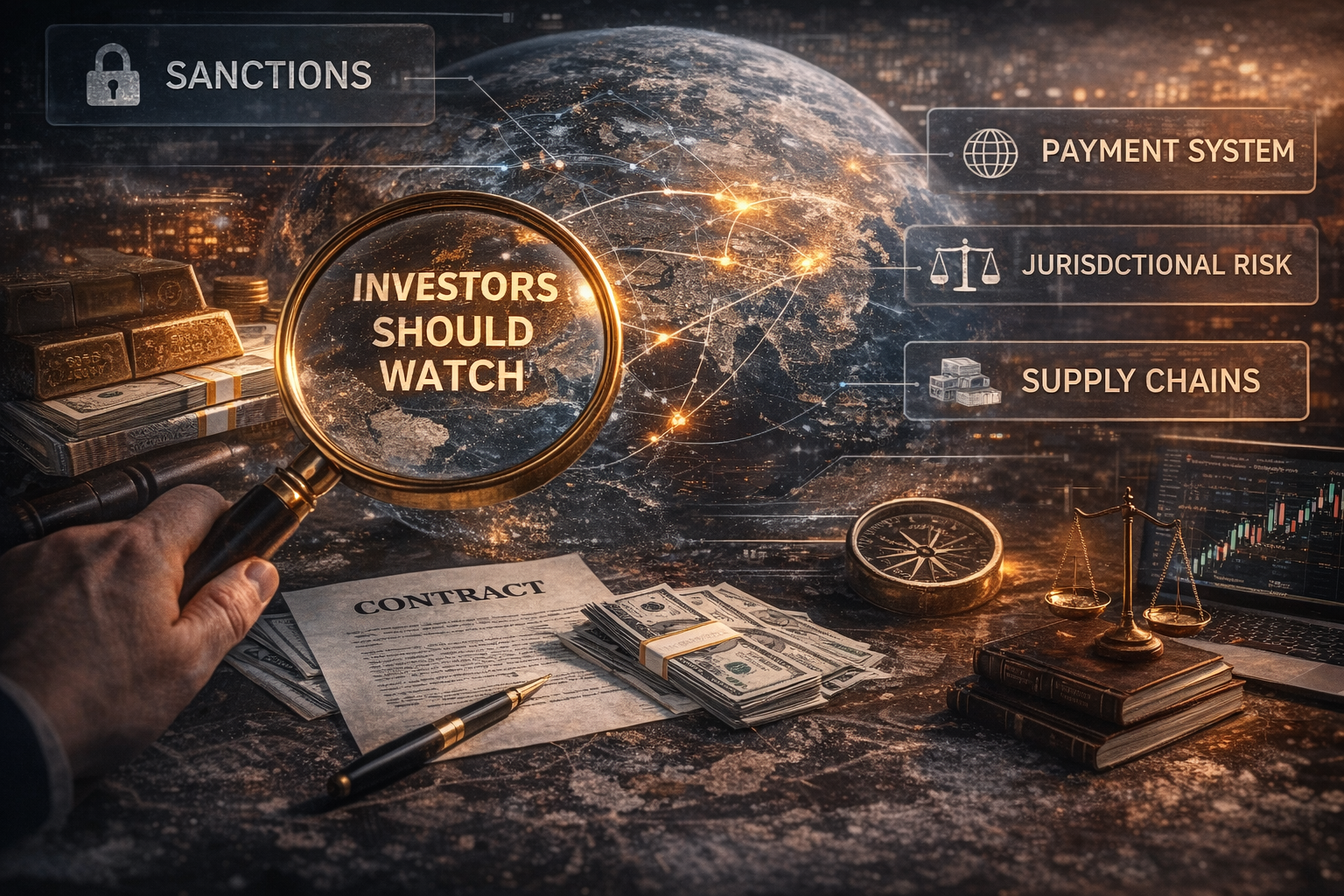
That means looking more closely at sanctions exposure, payment-system dependence, jurisdictional risk, supply-chain resilience, and the legal architecture surrounding trade routes and insurance markets.
None of these replaces traditional market analysis. But together, they may become a more important part of it.
The Rules Behind the Prices
Regional conflicts do not only move prices.
They also test the institutional framework that makes global markets possible.
For years, investors could afford to treat that framework as background noise—stable, neutral, and mostly invisible. That is becoming harder to do.
Today, the bigger market story is not simply that geopolitical tensions create volatility. It is that they can alter the rules beneath the volatility: who can access assets, which financial channels remain open, and how smoothly trade continues to move.
Markets will keep adapting, as they always do. But investors may need to spend a little more time watching the rules behind the prices—not just the prices themselves.

